
Last updated November 25, 2026
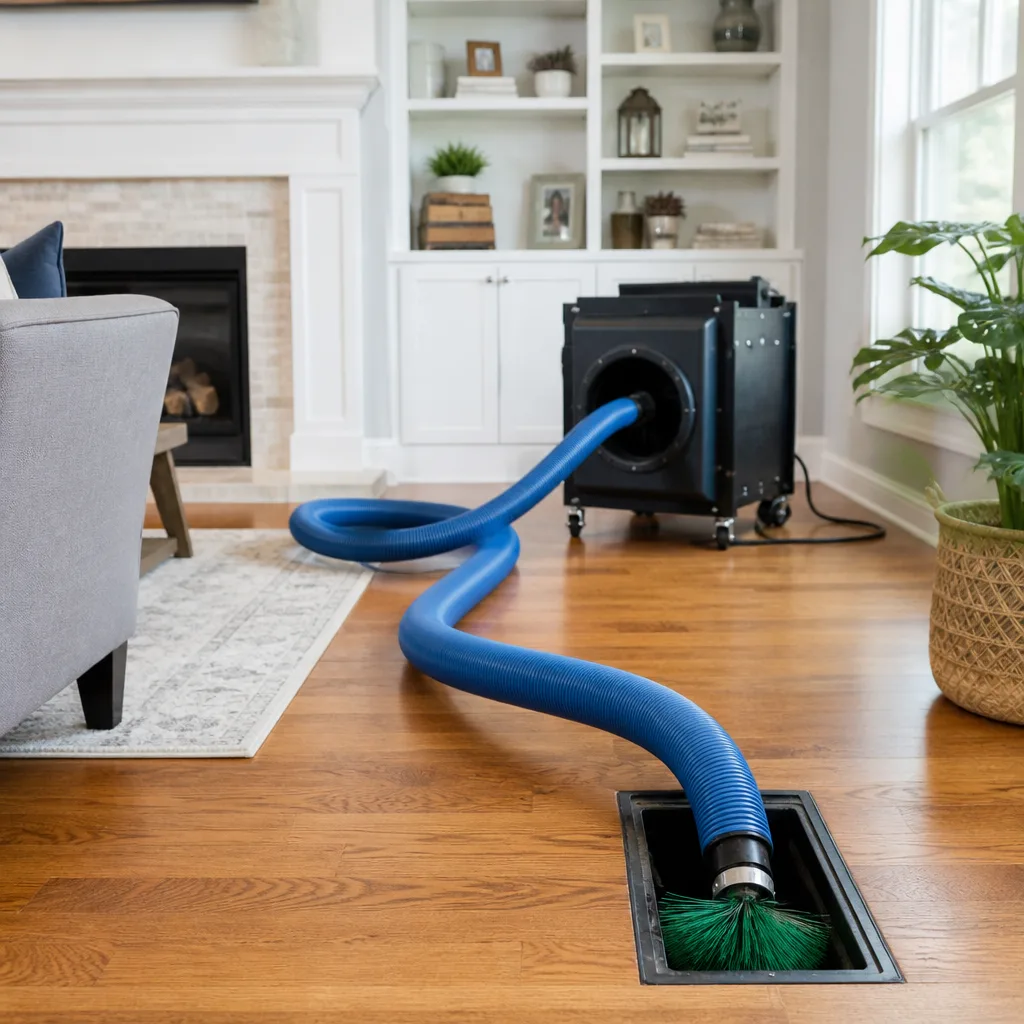 Whole-home duct cleaning
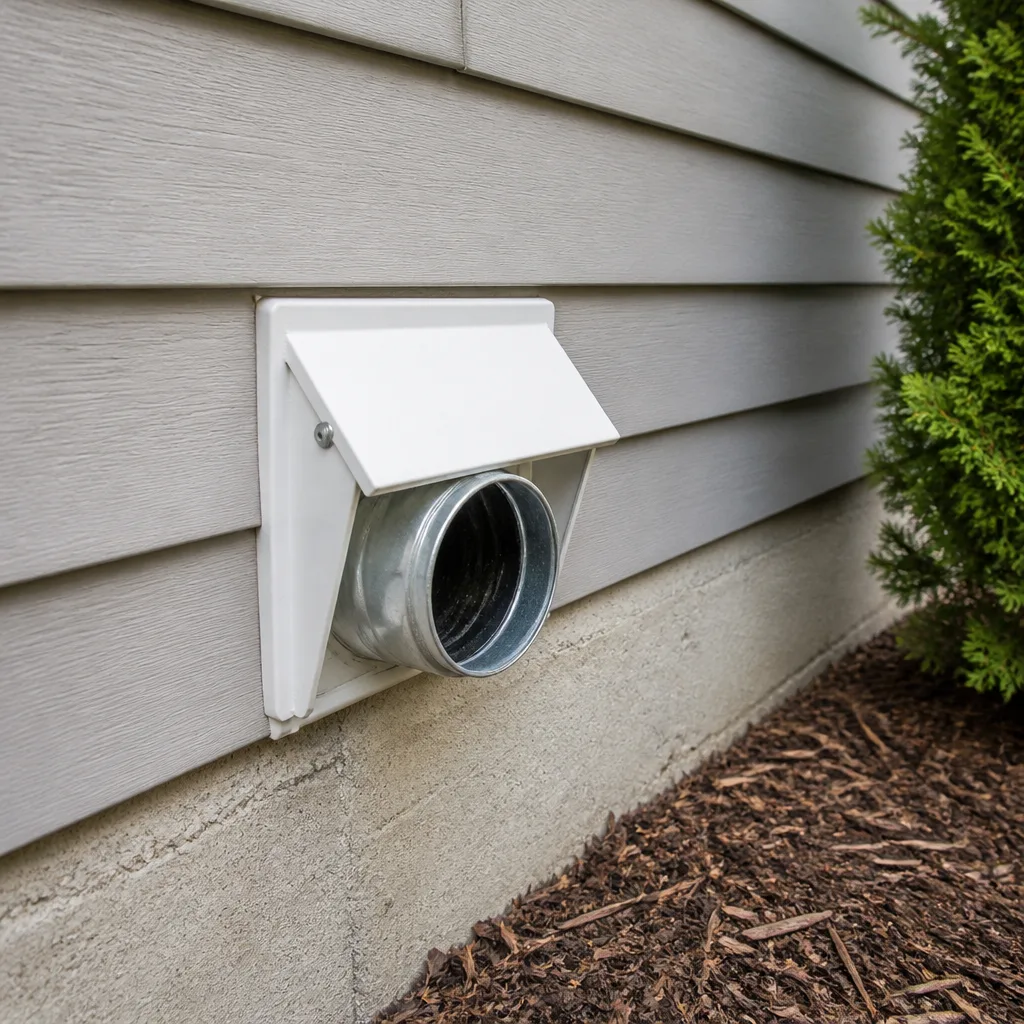 Dryer vent cleaning
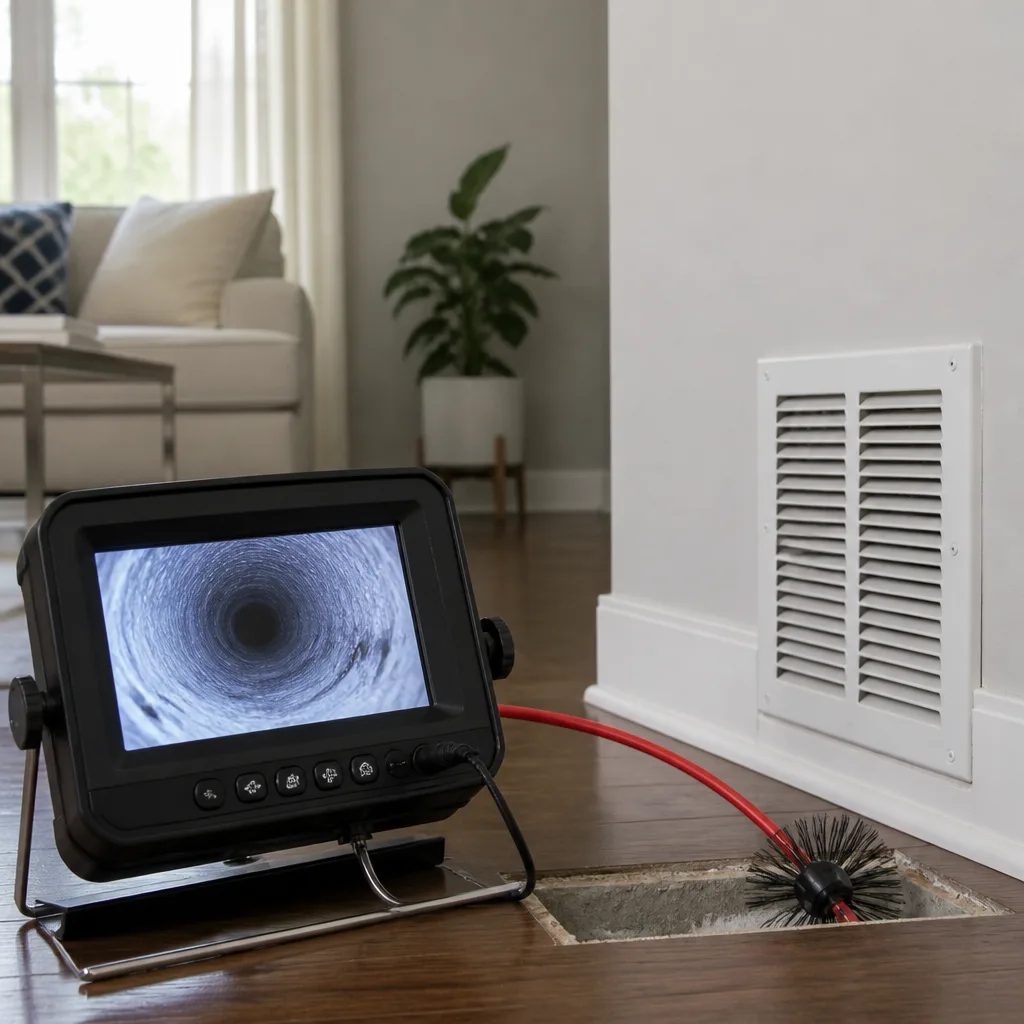 Camera inspection
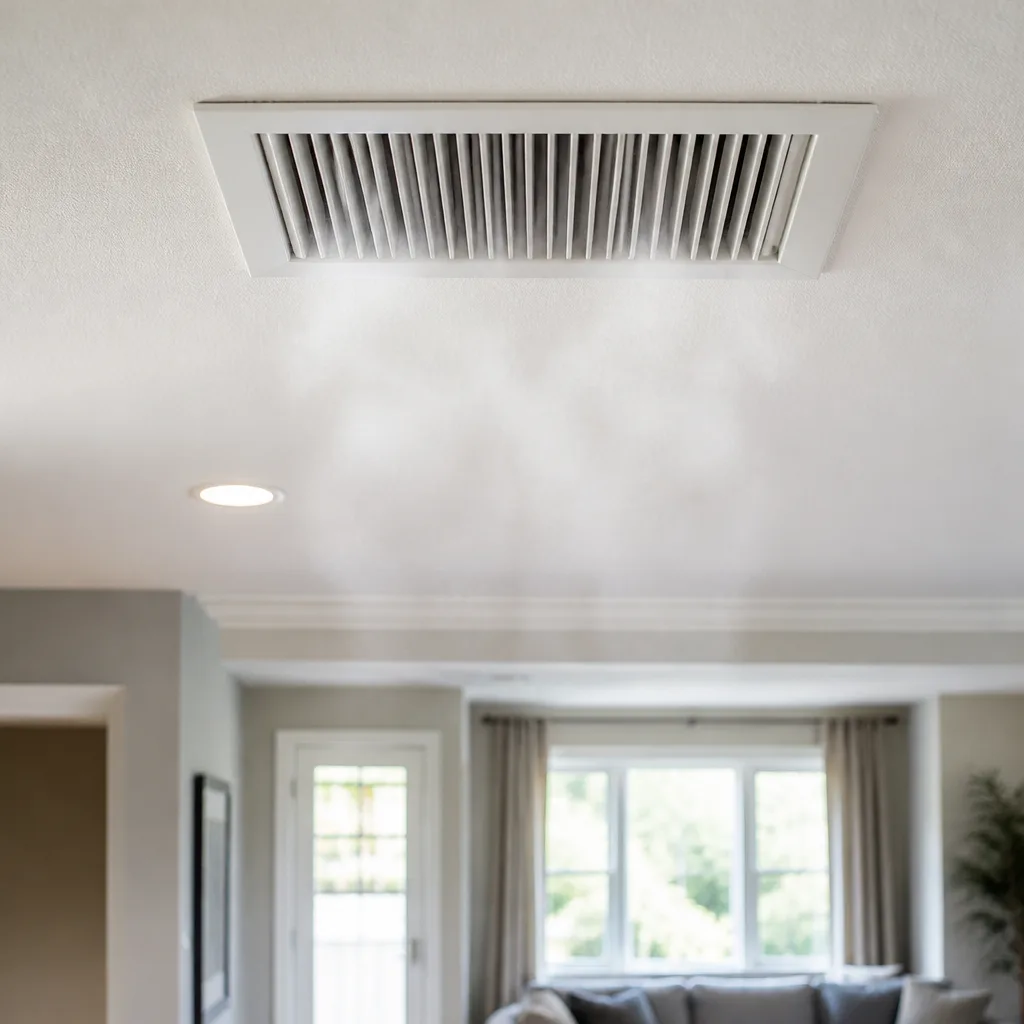 Sanitizing & deodorizing
Whole-system duct and dryer vent check with before-and-after photos - you see exactly what came out of your vents
That "$99 whole-house special" is a bait ad - the real number appears once they are in your hallway, or the "clean" is a shop-vac at the register. We photograph the inside of your ducts before and after instead.
Seasonal Air Duct Cleaning Care for South Buffalo: Year-Round Homeowner’s Guide
Most homeowners treat duct cleaning as a once-every-few-years chore, something you schedule when the vents look dusty or when a furnace filter change slips your mind. That approach misses what’s actually happening in a South Buffalo home. This region puts four distinct kinds of stress on ductwork across the year, and each season leaves its own fingerprint inside the system. Lake-effect snow seasons in Buffalo average over 90 inches annually, and the freeze-thaw cycles that follow push humidity into ducts through the same gaps that let conditioned air escape. Which means spring isn’t a fresh start for your ducts. It’s often the dirtiest point of the year. This guide walks through what each season does in South Buffalo, when to act and when to wait, and how to build a maintenance calendar that fits how homes here actually run.
Quick Answer
In South Buffalo, the best time for a full duct cleaning is late spring, after the heating season ends and before air conditioning begins – that’s when the system holds the most accumulated debris and the highest moisture risk. Fall is the time for inspection before the furnace starts running again, and mid-winter filter changes matter more here than in milder climates because heating demand runs so sustained. A seasonal rhythm of inspection in fall, cleaning in spring, and filter checks throughout winter covers what most South Buffalo homes need.
Styles & brands we work with
- Whole-home duct cleaning
- Dryer vent cleaning
- Camera inspection
- Sanitizing & deodorizing
Table of Contents
- Why Ducts Behave Differently in South Buffalo’s Climate
- Fall: Pre-Heating-Season Inspection Priorities
- Winter: Sustained Heating Demand and Particulate Load
- Spring: The Highest-Mold-Risk Window
- Summer: AC Operation and Humid Air Pulled Through Leaks
- A South Buffalo Duct Maintenance Calendar
- Signs Your Ducts Need Attention Now, Not Later
- What a Full-System Cleaning Involves
Why Ducts Behave Differently in South Buffalo’s Climate
Ductwork in a mild climate gets a fairly even workload. The furnace runs for a few months, the AC handles the rest, and the system sits mostly idle in between. South Buffalo doesn’t work that way. Heating season here is long and demanding, cooling season is humid and real, and the transitions between them involve rapid swings in temperature and moisture. Your ducts are the lungs of the house during all of it, moving thousands of cubic feet of air a day through a network that’s mostly hidden behind drywall.
What changes with the seasons is the makeup of the air moving through those ducts and the condition of the duct surfaces it touches. In winter, warm, dry air picks up dust and particles and carries them through rooms that are sealed tight against the cold. In summer, cool air moving through ducts creates condensation risk on any surface that isn’t well insulated. In spring, the thaw and the moisture that comes with it finds every gap and seam in the system. In fall, the system sits idle just long enough for buildup to settle before the furnace wakes it back up.
That cycle means a duct system in South Buffalo is always either accumulating something or releasing it. The question is whether you’re managing that cycle or letting it run on its own.
- Heating season runs long and steady, so systems circulate far more air here than in milder markets.
- Freeze-thaw cycles create repeated moisture movement into the building envelope, and gaps in ductwork become a path for it.
- Lake-effect humidity spikes in spring and early summer, raising condensation risk inside cooler duct runs.
- Homes here tend to stay closed up for months at a stretch, which means whatever is in the ducts stays in the air.
We’ve seen the difference a season makes. A system that looks fine in October can show real buildup by March, simply because of how many hours the furnace ran in between.
Fall: Pre-Heating-Season Inspection Priorities
Fall is the season to look before you leap into heating season. Once the furnace fires up for good, you’re living with whatever condition the ducts were in when it started. A fall inspection catches problems while they’re still cheap to fix and before they get circulated through every room in the house for five months.
Start with the furnace itself. When a heating system sits idle through the warm months, dust and debris settle on the heat exchanger and in the plenum. The first time the furnace fires, that material burns off, and the smell that comes out of the vents is a direct signal about how much has accumulated. A faint, brief odor is normal. A strong or persistent smell, or visible dust blowing from the registers, tells you the system needs more than a filter change.
Heat exchanger condition is the safety item in this list. A cracked heat exchanger can allow combustion gases into the airstream, and that’s not something to diagnose by smell or guesswork. If you notice unusual odors, soot around the unit, or a flame that looks off, get a qualified heating technician to inspect it before you run the system. Duct cleaning addresses what’s in the ducts; it doesn’t substitute for a combustion safety check.
Fall inspection priorities for South Buffalo homes:
- Check the first-fire odor. Run the furnace for a few minutes and note whether the smell clears quickly or lingers. Lingering odor means a deeper cleaning and a furnace check are due.
- Look at the registers. A visible dust plume when the blower starts means debris has settled in the supply runs over the summer.
- Inspect accessible duct seams and joints. Any gap that shows light or lets air escape is a leak that will pull in attic or crawlspace air once the system pressurizes.
- Change the filter before the first cold snap, not after. A fresh filter in October does more work than one swapped in December.
- Schedule a full-system cleaning if it’s been more than a couple of years or if you’ve done renovation work in the home since the last one.
If the inspection turns up compromised ductwork – crushed runs, disconnected joints, holes from pests or renovation – that’s a repair job, not just a cleaning job. Our duct repair & sealing work handles those problems directly, rather than cleaning around them and leaving the leak in place.
Winter: Sustained Heating Demand and Particulate Load
Winter in South Buffalo isn’t a mild test of the heating system. It’s months of near-constant runtime. Every hour the blower runs, it moves the same air volume through the same ducts, and every particle suspended in that air gets one more chance to settle on a duct surface or get pulled into a return. By mid-winter, a system that started the season clean is carrying a meaningful load.
The usual advice is to change the filter every one to three months, and for many homes that’s reasonable. In South Buffalo specifically, there’s a case for going shorter during the coldest stretch. When the furnace runs nearly continuously, the filter loads faster than the calendar suggests. A filter that looks acceptable at eight weeks may already be restricting airflow enough to strain the blower and cut efficiency. If you have pets, if anyone in the house has allergies or asthma, or if you’ve been running the system hard through a cold snap, check the filter monthly and replace it based on how it looks and how the airflow feels, not just the date on your reminder.
Filter changes, though, only catch what reaches the filter. They don’t remove what’s already settled inside the duct runs, and they don’t fix the fact that a leaky return can pull dusty air from a basement or crawlspace straight into the system. Mid-season is also when homeowners start noticing symptoms that point back to the ducts:
- Dust settling on surfaces faster than usual, even with regular cleaning
- Dry, irritated eyes or throat that improve when you leave the house
- A musty or stale smell in rooms that are closed off
- Uneven heating – some rooms warm up fine, others lag no matter what the thermostat says
- Visible dust streaks around supply registers
Those signs don’t always mean you need a full cleaning mid-winter, but they do mean something in the system is off. A quick inspection can tell you whether it’s a filter issue, a leak, or accumulated debris.
Spring: The Highest-Mold-Risk Window
Spring gets treated like a reset. In reality, for a South Buffalo duct system, it’s often the worst point of the year. Here’s why. Through winter, the system ran warm and dry, and any moisture that got into the ducts was driven off by the heat. Once heating season ends and the thaw sets in, that changes fast. Outdoor humidity climbs, the freeze-thaw cycle loosens the ground and pushes moisture against the foundation and into any gap it can find, and duct systems that were sealed tight against dry winter air now sit in a much wetter environment.
If your ducts have seams that leak, that moisture has a path in. Once inside a duct run that’s no longer being warmed by the furnace, that moisture sits. Duct surfaces are dark, they hold dust and organic debris, and they offer exactly the conditions mold needs. This is the window in South Buffalo where mold growth inside ductwork is most likely to get a foothold, and it’s the window where cleaning makes the most difference.
Spring assessment checklist:
- Smell the registers. A musty or earthy odor coming from the vents in early spring is the clearest sign moisture has gotten into the system.
- Check for condensation. Any visible moisture on duct surfaces in a basement or crawlspace is a problem that needs addressing before summer cooling starts.
- Inspect around the foundation and in the basement for signs that spring moisture is reaching interior spaces near duct runs.
- Look for staining or discoloration at duct joints or on the insulation around them.
- Book a cleaning and sanitizing pass if any of the above show up, and have the leaks sealed so moisture doesn’t find its way back in.
A cleaning alone doesn’t solve a moisture problem. If the ducts are wet and the source of that moisture isn’t fixed, the growth comes back. That’s why we treat cleaning, repair, and sealing as one job rather than three separate visits. Our air duct cleaning work starts with a full assessment so the moisture source gets identified before anything gets cleaned.
Summer: AC Operation and Humid Air Pulled Through Leaks
Air conditioning works by moving heat out of your home and cool, dehumidified air through the ducts. That process depends on the duct system being sealed. Return ducts run under negative pressure, which means any gap in them pulls air in from wherever they pass through – a hot attic, a damp crawlspace, a wall cavity. A leaky return doesn’t just lose efficiency. It pulls humid outdoor air and whatever else is in those spaces straight into the airstream and delivers it to your rooms.
In a Buffalo summer, that matters. If the return is pulling in humid attic air, the AC has to work harder to condition it on top of cooling the house, and the coil and ducts see more moisture than they should. That’s how you end up with condensation on duct surfaces and, over time, the same growth risk you’d see in spring. Summer condensation inside a duct isn’t normal – it’s a signal that the system is either leaking, poorly insulated, or both.
The right move in summer is to check for leaks before you need the AC running full tilt. Sealing those leaks with proper materials does two things: it stops pulling in unconditioned air, and it keeps the cooled air you’re paying for inside the system. It’s the difference between a system that conditions the house and one that conditions the attic and the house at the same time. Our HVAC cleaning work includes a look at the whole air-handling system, not just the visible duct runs, because that’s where the leaks that matter tend to hide.
Don’t overlook the dryer vent in all of this. Summer is a season when the dryer runs more (fewer layers, more loads), and a clogged dryer vent is one of the leading causes of house fires. Duct cleaning companies that only handle HVAC miss this entirely. Our dryer vent cleaning is a core service for the same reason we clean ducts: because the whole house’s air path matters, not just the parts connected to the furnace.
A South Buffalo Duct Maintenance Calendar
Generic advice says to clean ducts every three to five years, which is about as useful as saying “change your oil eventually.” In a climate like South Buffalo’s, the right checkpoint depends on the season, not just the interval. Here’s a calendar built around how a South Buffalo home actually runs through the year.
- September: Change the furnace filter. Run the furnace for a few minutes and note the first-fire odor. If it’s strong or lingers, book an inspection and cleaning.
- October: Inspect accessible duct seams for gaps or disconnections. Seal any you find before heating season. This is the best month to do a full cleaning if you’re due.
- November – February: Check the filter monthly. Replace when it looks loaded or airflow drops. If you see unusual dust, odors, or uneven heating, call for an inspection.
- March: After the heating season ends, inspect the registers for dust plumes the first time the fan runs on its own. Check the basement and crawlspace for moisture reaching duct runs.
- April – May: This is the window for a full cleaning and sanitizing pass if any of the spring signs are present. Have leaks sealed before AC season begins.
- June – August: Inspect the return for leaks. Check for condensation on duct surfaces. Clean the dryer vent if it’s been a while. Change the filter before the peak AC stretch.
If you’ve recently renovated, added insulation, or had any kind of pest issue in the walls or attic, add a cleaning to whichever season that work finished in. Construction dust and debris get into the ducts and stay there until they’re removed.
Signs Your Ducts Need Attention Now, Not Later
The seasonal calendar is a baseline. Some signals bypass it entirely and mean you should get the system looked at regardless of the season. Here’s what to watch for in a South Buffalo home.
- Visible dust blowing from vents when the system starts. Settled debris being pushed out means the supply runs are carrying more than air.
- Persistent musty or earthy smell from the registers. This is the clearest indicator of moisture and potential mold growth.
- Unexplained increases in the heating or cooling bill. A leaky duct system can cost you real money every month. If the bill climbs without a rate change or weather explanation, the ducts are a suspect.
- Uneven room temperatures. Hot and cold spots can be a duct design issue, but they can also mean leaks or blockages in the runs feeding those rooms.
- Visible mold or moisture on or around duct surfaces in a basement or crawlspace.
- Pest evidence in the ducts or around registers. Rodents and insects find their way into ductwork, and their debris doesn’t clear itself.
- Recent renovation. Drywall dust and construction debris settle in the system and get distributed every time the fan runs.
If more than one of these lines up, the most useful thing you can do is get an inspection. An assessment takes less time than a full cleaning and tells you what you’re actually dealing with.
What a Full-System Cleaning Involves
A proper duct cleaning isn’t a vacuum waved at the registers. It’s a source-removal job done with equipment that can reach and dislodge debris from the entire system, including the runs that aren’t visible from any room. Here’s what a real cleaning involves and why the equipment matters.
The work starts with a full assessment – register by register, plus the air handler, the plenum, and any accessible duct runs in the basement or attic. That assessment tells us whether the job is a cleaning, a cleaning plus repair, or whether there’s a moisture source that needs addressing first. From there, the cleaning uses high-powered negative-pressure equipment and agitation tools to dislodge and capture debris. The contractor-grade systems we use – Rotobrush and Nikro equipment for duct cleaning and agitation, and Abatement Technologies equipment for air quality and contaminant control – are the same class of tools used in commercial and remediation work, not consumer-grade vacuums or shop vacs. Our technicians have up to 14 years of experience working with these systems.
For sanitizing and filtration, we source products from Honeywell, Aprilaire, and Guardsman, so you know exactly what’s going into your home and can verify it yourself. That matters more than a generic “we sanitize” promise. You’ll recognize the names on the products, and that’s the point.
Step by step, a full-system job looks like this:
- Assessment: register-by-register inspection of the full system, including the air handler and accessible duct runs.
- Setup: negative-pressure containment so disturbed debris gets captured rather than redistributed into the house.
- Cleaning: high-powered agitation and vacuum equipment clears the duct runs, plenum, and air handler.
- Repair: any leaking, disconnected, or crushed runs get repaired and sealed. Cleaning a leaky system leaves the problem half-solved.
- Sanitizing: where moisture or growth was present, a sanitizing pass with products sourced from recognized air-quality brands.
- Verification: photos of the before-and-after so you can see what was actually done, not just take a technician’s word for it.
Not every home needs every step. A home with clean ducts but a leaky return might just need repair and sealing. A home that’s had a moisture issue in the basement might need cleaning plus sanitizing. The full assessment is what tells you which of those applies. That’s why we do it before quoting the job.
Common Mistakes to Avoid
- Cleaning once and assuming it lasts for years regardless of the season. South Buffalo’s climate puts four distinct stress periods on the ducts, and a system that needs attention in spring won’t be sorted by a cleaning done in fall of the previous year.
- Skipping the leak inspection. Cleaning a system with leaking returns means the same humid, debris-laden air comes straight back in. Seal the leaks, then clean.
- Replacing the filter on the calendar instead of on the load. In a South Buffalo winter, the furnace runs hard enough that the filter loads faster than the three-month advice suggests. Check monthly.
- Ignoring the first-fire smell in the fall. A strong or lingering odor at startup is telling you something about the furnace and the ducts. Treat it as a signal, not a nuisance.
- Assuming spring cleaning is just cosmetic. Spring is the highest-mold-risk window here. A spring cleaning done after the thaw addresses the moisture damage the winter and freeze-thaw cycle set up.
- Forgetting the dryer vent. A clogged dryer vent is a fire risk, and most HVAC-only companies don’t touch it. It’s part of the whole-house air path and needs cleaning too.
- Choosing a quote based on the lowest number alone. A quote that’s dramatically lower than others often reflects a smaller scope: registering cleaning without the air handler, no leak inspection, no photos. Ask what’s included.
See the difference
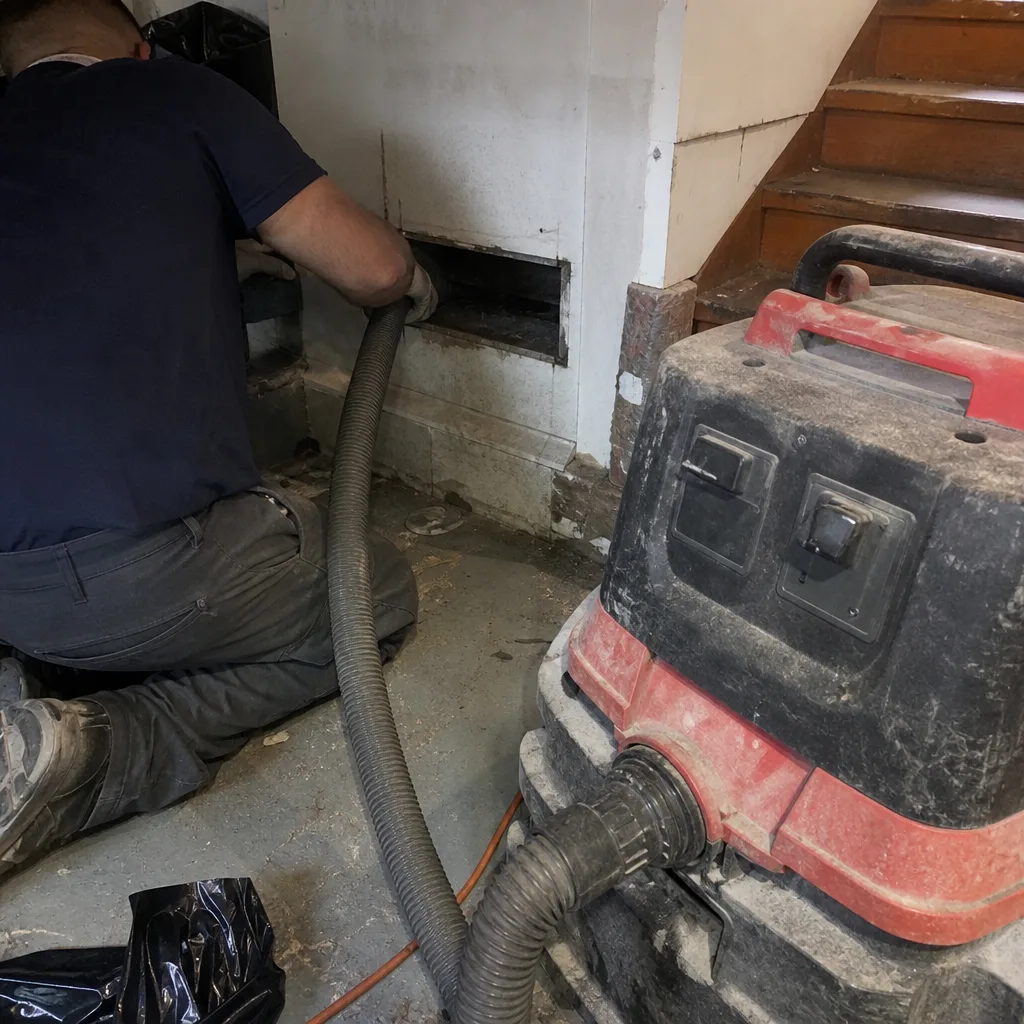 Before
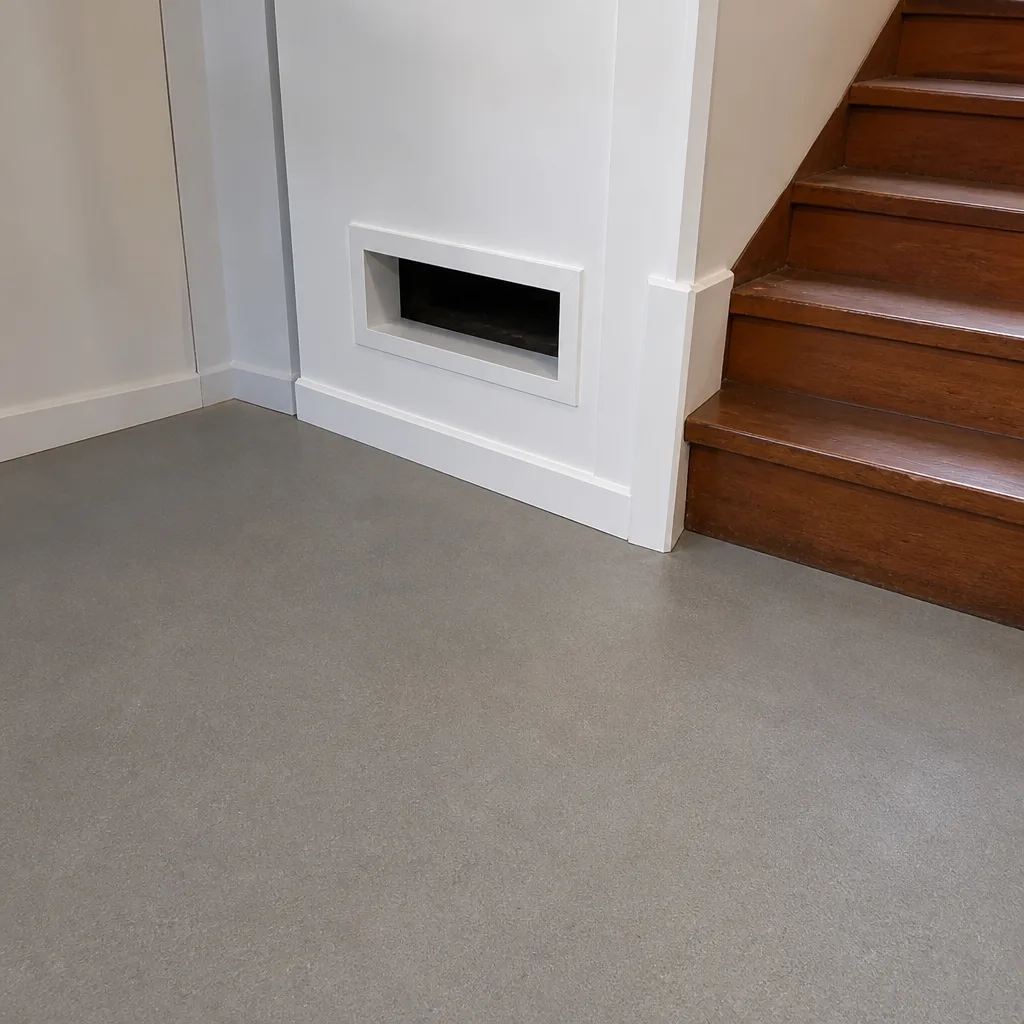 After
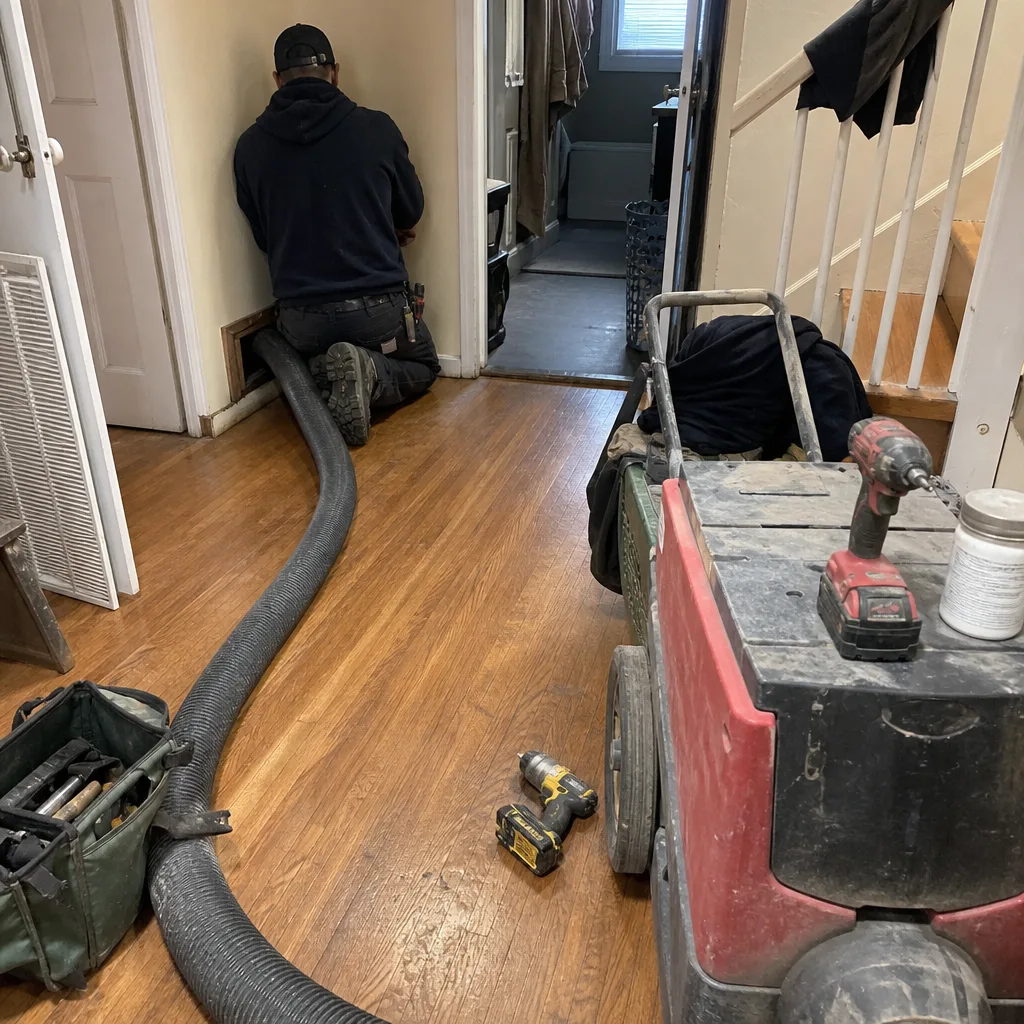 Before
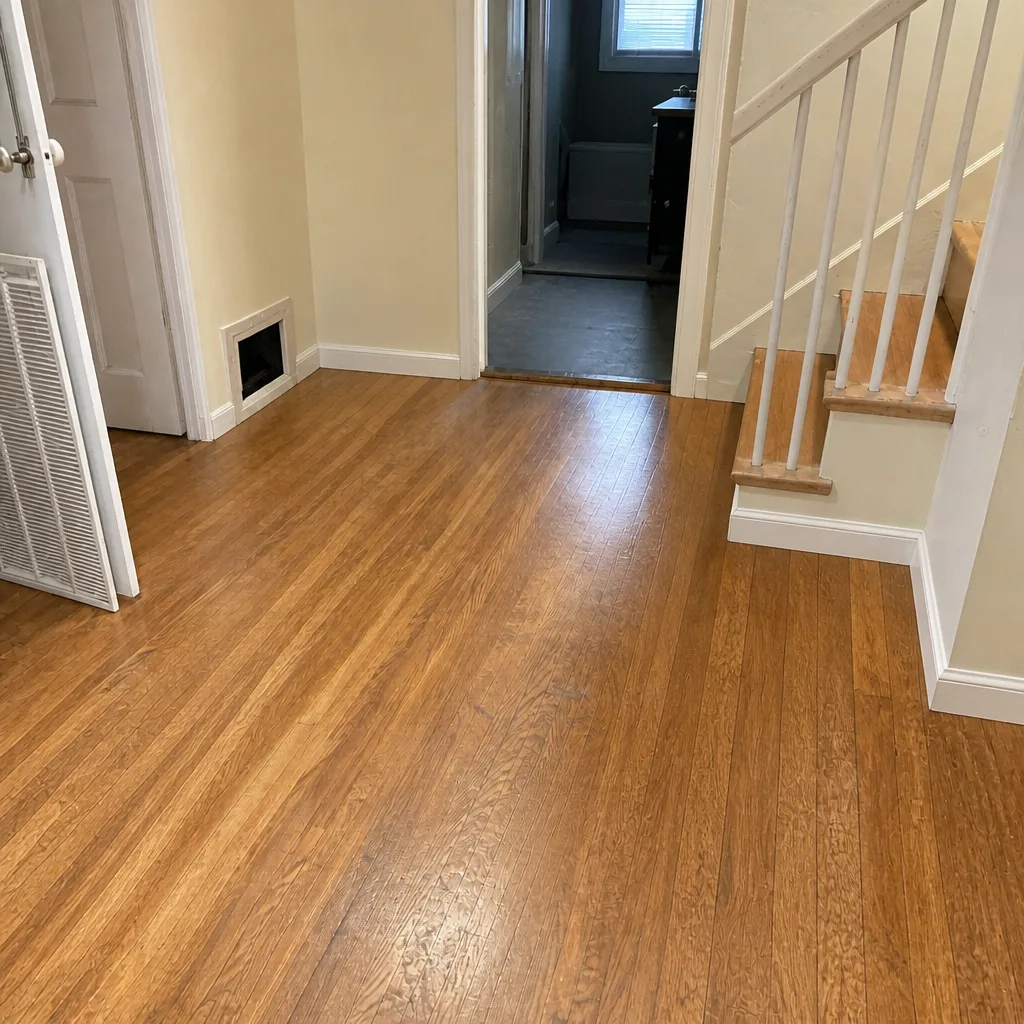 After
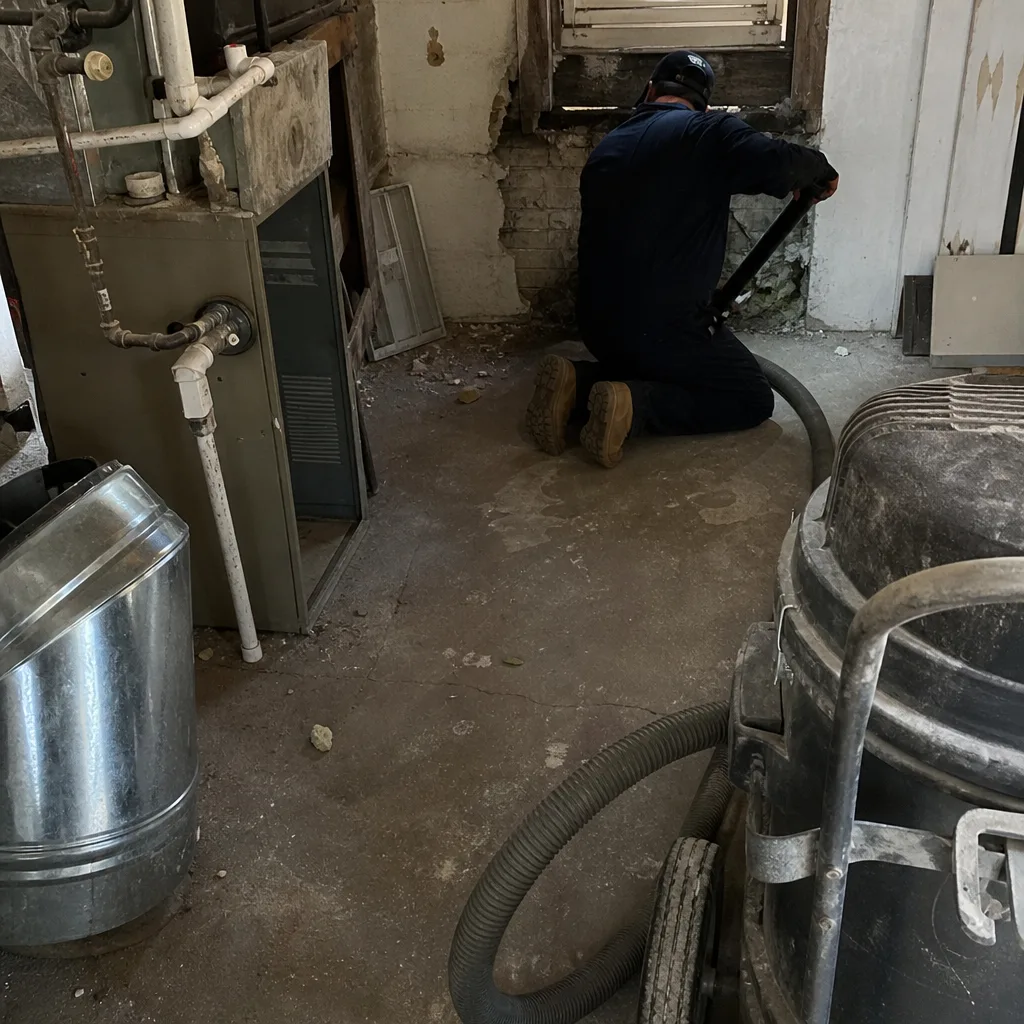 Before
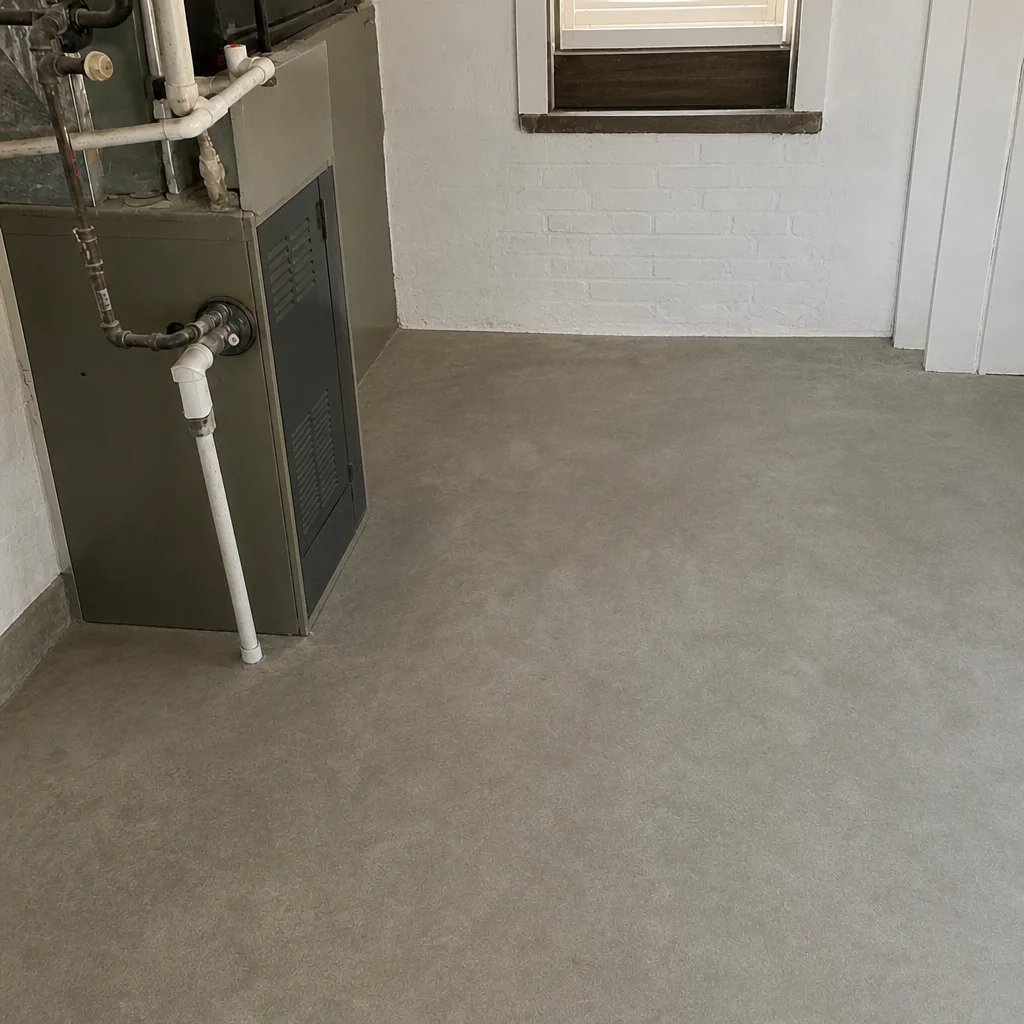 After
When to Call a Professional
Some of this work – filter changes, seasonal walk-around checks – you can do yourself, and should. Where it stops being a DIY job is where the tools and the technical judgment required go beyond a homeowner’s kit. Crushed or disconnected duct runs in an attic or crawlspace, moisture that’s gotten into the system and possibly led to mold growth, a suspected heat exchanger problem, or a leaky return that’s pulling in humid outdoor air – these need professional assessment. A shop-vac and a register brush won’t reach the surfaces that matter, and they won’t diagnose the source of the problem. If you’re seeing the signs above or you’ve never had a full-system cleaning done, an inspection is the right first step. Air Duct Cleaning South Buffalo offers free estimates in South Buffalo. Call (844) 935-2565. We answer 24/7. Fast dispatch from 7am to 7pm, Sunday through Friday.
Frequently Asked Questions
A full cleaning every two to three years is a reasonable baseline for most South Buffalo homes, with spring being the best time to book it. Homes with pets, allergy sufferers, recent renovations, or any history of moisture issues should be inspected annually. The seasonal calendar in this guide matters more than the raw interval – what matters is catching the system at the right point in its annual cycle.
Late spring is the best season for a full cleaning here. By then, the heating season has ended, moisture from the thaw has pushed against the system, and the accumulated load from winter is at its peak. Cleaning before AC season starts means the system goes into summer cooling clean, sealed, and dry.
A musty smell from the vents in spring is the clearest sign moisture has gotten into the duct system and something is growing on it. The freeze-thaw cycle and rising outdoor humidity push moisture through gaps in the ductwork, and once inside a dark, dust-covered run, that moisture creates ideal conditions for mold. Get the system assessed and have any leaks sealed. Call (844) 935-2565 for a free estimate – we answer 24/7.
No, not effectively. A shop vac can reach the register openings but not the duct runs behind the walls or under the floors, and it won’t disturb debris that’s settled on the duct surfaces. Professional cleaning uses high-powered agitation and negative-pressure equipment that a consumer vacuum can’t match. Rotobrush and Nikro equipment is the standard for a reason.
It’s handled differently here rather than simply being more important. The long heating season means more hours of air circulation every year, the freeze-thaw cycle adds a moisture factor in spring that milder climates don’t see, and the closed-up winter months concentrate whatever’s in the ducts inside the home. A seasonal schedule that accounts for those specific conditions gets better results than a generic cleaning interval.
Yes. Cleaning a leaking system cleans around the problem and then leaves it in place to keep pulling in unconditioned, humid, or debris-laden air. Leaks should be repaired and sealed, not simply cleaned past. We handle cleaning, repair, sealing, and sanitizing as one job, so the system is fixed all the way through, not just cleaned and left.
What to Do Before You Call
Before you book a cleaning, do a quick walk-through of your home. Note which rooms feel uneven or look dustier than the others, check the registers for visible dust streaks, and look at the filter to see how loaded it is. If you’ve had work done in the house or a moisture issue in the basement or crawlspace, make a note of that too. All of it helps the assessment happen faster and makes the estimate more accurate. A professional-grade cleaning is a whole-system job, and the more you can tell a technician about what you’ve noticed, the more precise the work will be. If you’re not sure whether the issue is the ducts, the furnace, or just a dirty filter, that’s exactly what a free estimate can sort out.
The Bottom Line
South Buffalo’s climate doesn’t let you set ducts on an autopilot schedule. Fall inspection, spring cleaning, filtered winter, and a summer leak check is the rhythm that matches how homes here run. Each season does something different to your duct system, and the best maintenance plan is the one that responds to that cycle instead of ignoring it. If you’re due, or you’re seeing signs that point to a bigger problem, get the system assessed before you need it. Air Duct Cleaning South Buffalo offers free estimates on cleaning, repair, sealing, and sanitizing. Call (844) 935-2565. We answer 24/7. Fast dispatch from 7am to 7pm, Sunday through Friday.
Written by the team at Air Duct Cleaning South Buffalo.