
Last updated November 25, 2026
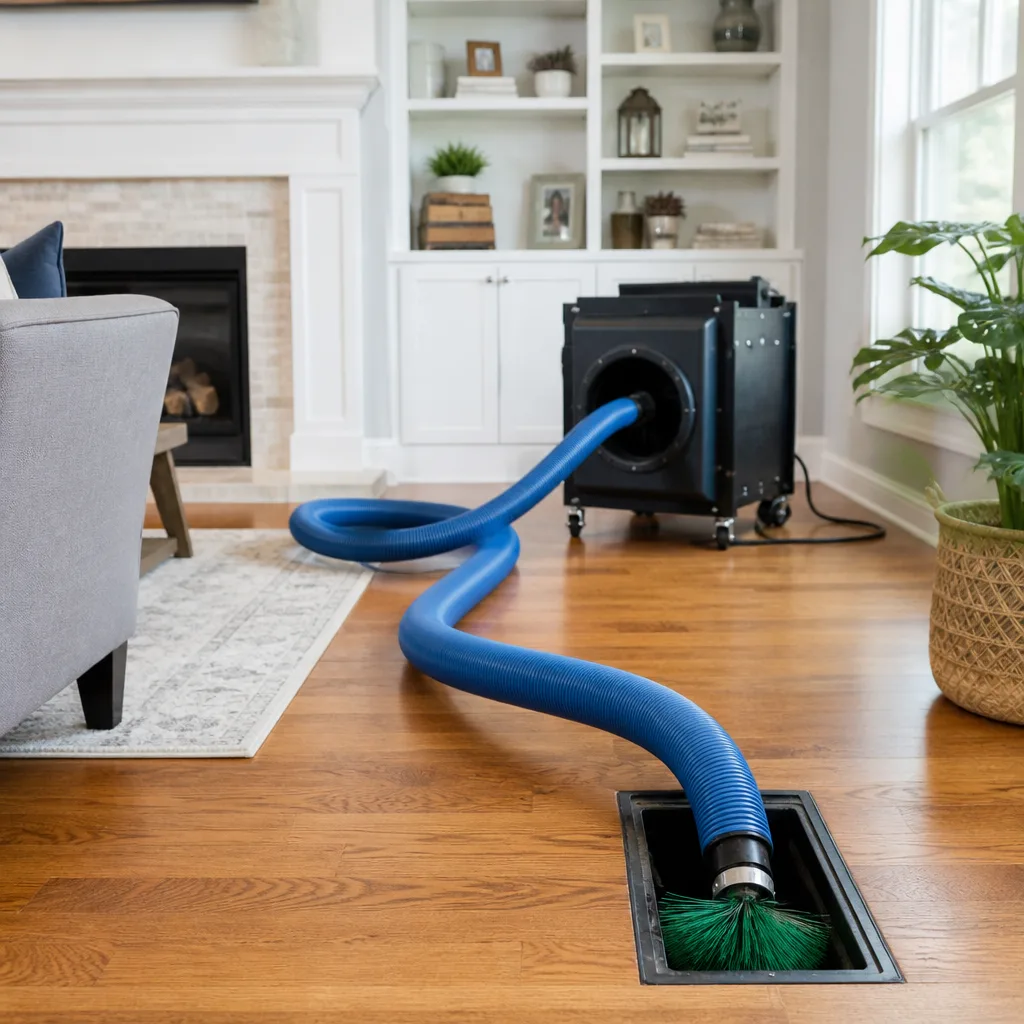 Whole-home duct cleaning
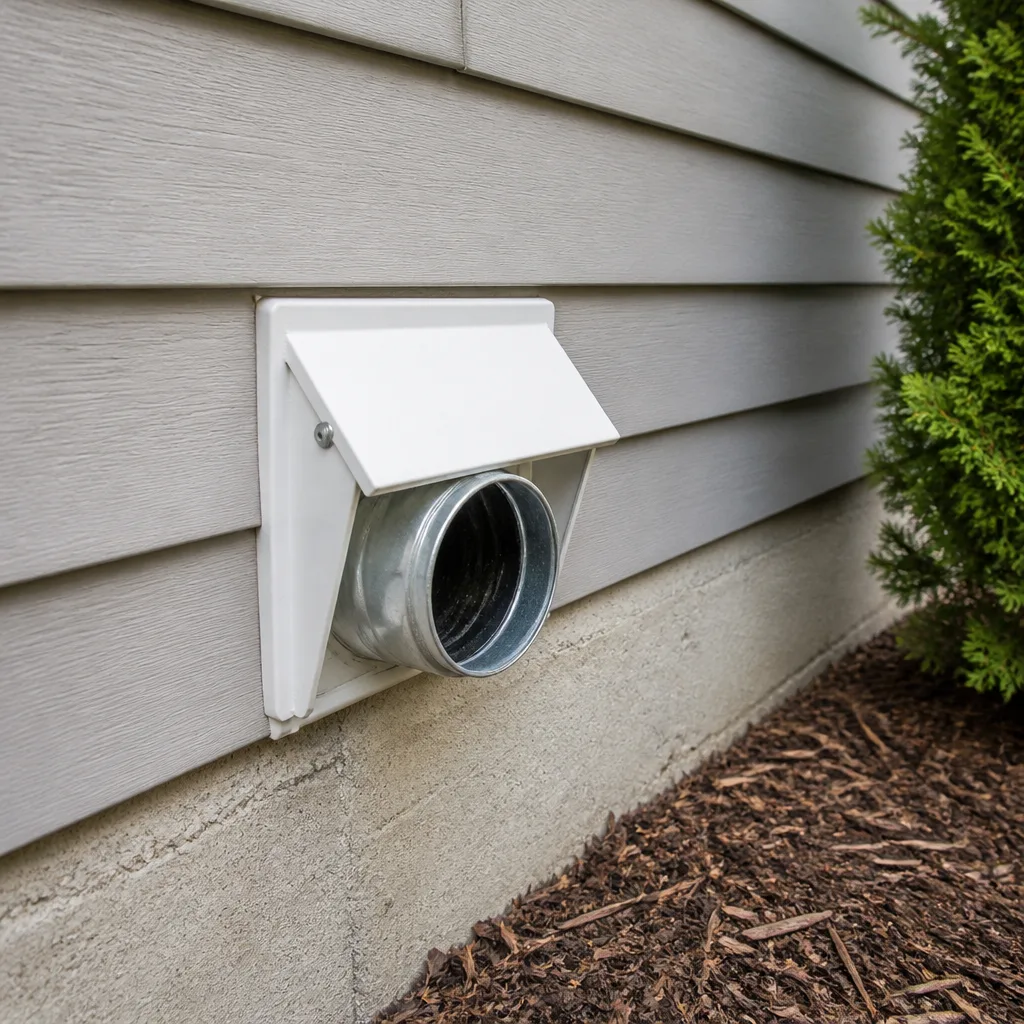 Dryer vent cleaning
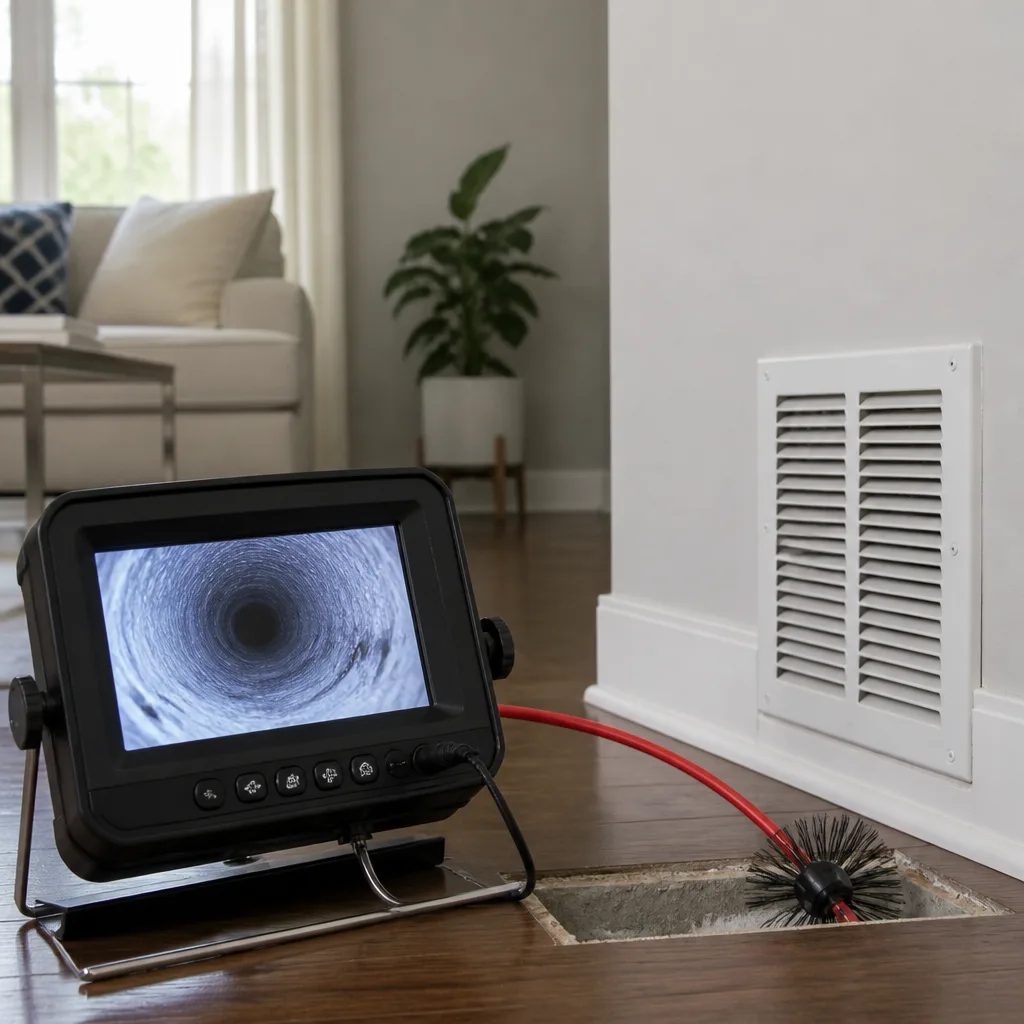 Camera inspection
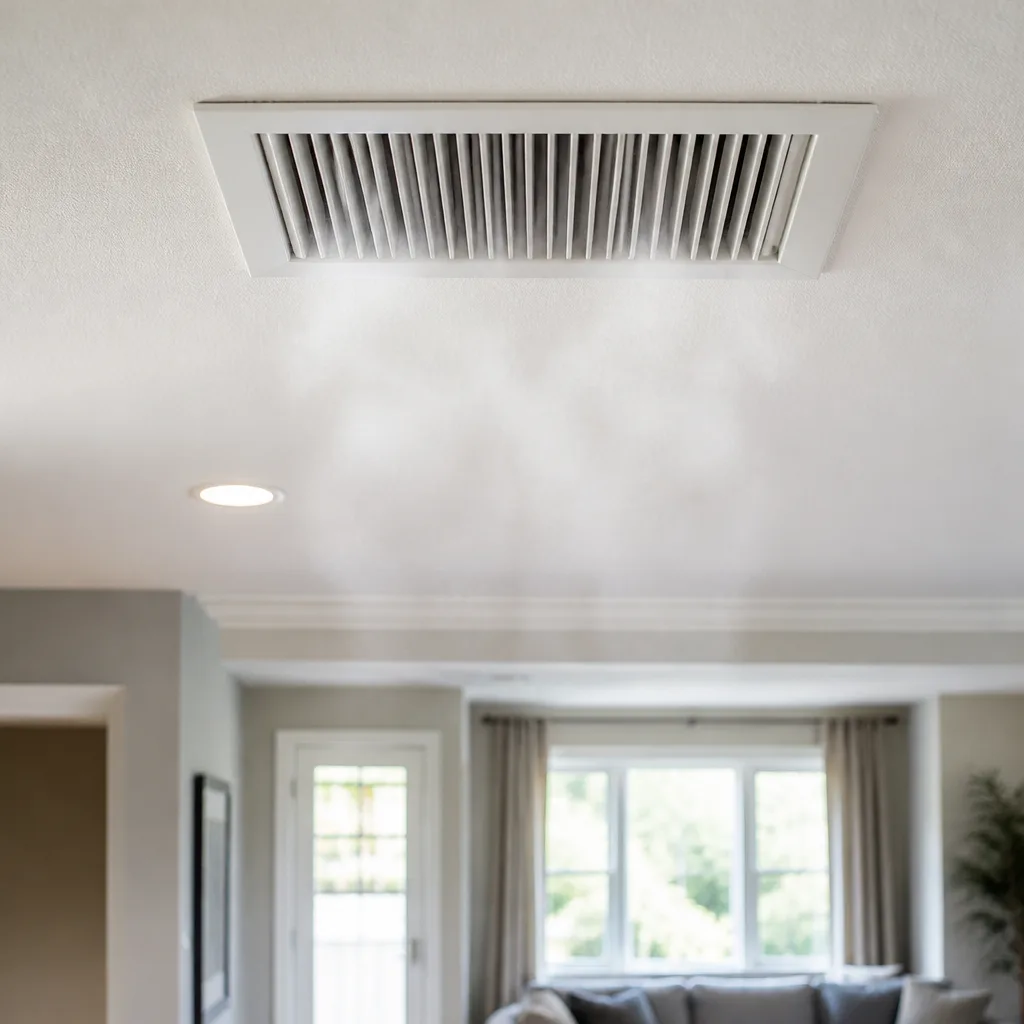 Sanitizing & deodorizing
Whole-system duct and dryer vent check with before-and-after photos - you see exactly what came out of your vents
That "$99 whole-house special" is a bait ad - the real number appears once they are in your hallway, or the "clean" is a shop-vac at the register. We photograph the inside of your ducts before and after instead.
Air Duct Cleaning Permits, Codes & Inspections in South Buffalo, NY: What You Need to Know
Routine air duct cleaning in New York doesn’t trigger a building permit. But the moment a technician cuts a new access panel into your plenum, reroutes a trunk line to clear a blockage, or replaces a section of duct board, the work crosses into “alteration of a mechanical system” under the state code – and that changes what you should have on file, what a home inspector will ask for, and occasionally who has to sign off before the job starts. Most homeowners never hear this distinction until they’re selling a house or pulling a renovation permit. This guide walks through it for South Buffalo homes: where cleaning ends and mechanical work begins, how older housing stock in this part of the city intersects with asbestos rules, and what documentation to keep so a future inspection doesn’t stall.
Quick Answer
Air duct cleaning alone does not require a permit in New York. Under the New York State Uniform Fire Prevention and Building Code, cleaning is maintenance – not construction. A permit is typically required only when duct work involves new access openings in certain assemblies, altered routing of a mechanical system, installation of new duct runs, or work touching materials that fall under asbestos or mold remediation rules. For most South Buffalo homes, the practical answer is: no permit for cleaning, keep records anyway, and ask your contractor which side of the line your specific job falls on before work begins.
Styles & brands we work with
- Whole-home duct cleaning
- Dryer vent cleaning
- Camera inspection
- Sanitizing & deodorizing
Table of Contents
- Where cleaning ends and “alteration” begins under the NYS Mechanical Code
- Access panels: routine maintenance or permitted work?
- Asbestos and pre-1980 housing in South Buffalo
- When duct contamination becomes mold remediation
- What home inspectors and buyers look for during a sale
- The paperwork to keep on file
- How to vet a duct contractor in South Buffalo
- Common mistakes to avoid
Where Cleaning Ends and “Alteration” Begins Under the NYS Mechanical Code
The New York State Uniform Fire Prevention and Building Code contains a mechanical code chapter that governs how duct systems are installed, supported, sealed and accessed. It draws a clean line between maintenance and construction, and that line decides whether you need a permit.
Maintenance cleaning sits on the no-permit side. Removing accumulated dust, debris, pet hair and light buildup from an existing duct system that stays in its current configuration is a service call, not a construction project. Nobody pulls a permit to vacuum a trunk line.
Alteration sits on the other side. The code treats changes to the configuration, capacity or routing of a mechanical system as work that can require a permit and inspection. In practice, for duct work this typically means:
- New duct runs. Adding a branch to serve a finished basement or a new addition moves air volumes and static pressure the system was never balanced for.
- Rerouting a trunk or branch to clear a blockage. Cutting out and re-hanging a section of duct in a different position is a modification, not a cleaning.
- Replacing duct sections with a different material. Swapping rigid metal for flex, or replacing failed duct board, changes the system.
- Cutting new openings into the plenum in some assemblies. This is the one homeowners get blindsided by; see the next section.
- Any work touching asbestos-containing duct wrap, duct board or joint compound. Handled under separate state and federal rules.
What you should take from this: when a technician tells you they need to “open up” the system, ask whether they mean adding an access door for cleaning access, or cutting into duct material to modify routing. Those are different jobs under the code. In our experience across South Buffalo’s older housing stock, that single question separates a normal cleaning call from a job that needs a permit conversation with the City of Buffalo’s permit office before anyone picks up a saw.
For the routine cleaning side of the work – the part that doesn’t need a permit – air duct cleaning South Buffalo homeowners book most often is standard whole-system cleaning with negative-pressure equipment.
Access Panels: Routine Maintenance or Permitted Work?
Access panels are the gray area, and it’s worth understanding why. Duct systems need access points so a technician can actually reach the interior of the ductwork. Many houses, especially older ones in South Buffalo, have almost none – the original installers sealed everything at the joints and never planned for cleaning.
Two kinds of access work exist, and they sit on opposite sides of the permit line:
- Adding a service access door to a duct run for cleaning. This is the standard approach when a system has no reachable openings. A technician cuts a small opening, installs a gasketed access door, and seals it. In most cases this is treated as maintenance access – the system’s configuration doesn’t change.
- Cutting into the supply plenum or an assembly the code treats as part of the mechanical equipment envelope. The plenum is the box that sits directly on top of the furnace and distributes air into the trunk. Cutting new openings there can, depending on the assembly and local interpretation, trigger the mechanical code’s requirements for altered systems. That’s the scenario where a permit and inspection enter the picture.
The honest answer is that this varies by assembly type – whether the plenum is factory-sealed, field-fabricated, wrapped in duct board, or part of a manufactured unit – and by how your local inspector reads it. Not every jurisdiction interprets the same assembly the same way. That’s a conversation to have before the work, not after.
What we recommend to South Buffalo homeowners: ask your contractor, in writing, whether the access panels they plan to install are service-access doors or penetrations of a code-defined assembly. If it’s the latter, ask if they’re pulling a permit. A contractor who can answer that question clearly has done this before. One who says “nobody pulls permits for this” without asking which assembly type you have is guessing.
Access panels are also the moment duct integrity matters. A poorly sealed door leaks air into unconditioned space, which is why access work and duct repair & sealing belong in the same visit.
Asbestos and Pre-1980 Housing in South Buffalo
This is the section that matters most in South Buffalo, and it’s the one competitors skip. A large share of the city’s housing stock – particularly the neighborhoods south of downtown, around South Park, the streets off Abbott Road, and the older blocks near Cazenovia Park – was built before 1980. That date isn’t arbitrary. It’s the cutoff contractors use when deciding whether a material might contain asbestos.
Duct systems from that era can contain asbestos in three places:
- Duct wrap. A paper-backed insulation wrapped around the exterior of rectangular metal duct, common in mid-century installs. The wrap itself can contain asbestos.
- Duct board. Rigid fibrous board used to fabricate plenums, trunk transitions and return boxes. Older formulations can contain asbestos.
- Joint compound and sealant. The gray paste used to seal duct joints in older installs. Some formulations from before 1980 contained asbestos.
If any of these materials is present and in good condition and stays undisturbed, cleaning can usually proceed. If the material is damaged, friable (crumbly), or if the cleaning itself would disturb it – for example, a brush head cutting into deteriorated duct wrap – the correct sequence is not to clean around it. It’s to have a licensed asbestos abatement contractor handle the material first, then have the cleaning done. The rules governing this fall under the federal asbestos regulations and New York State Department of Labor oversight of asbestos abatement.
What this means practically: before any duct work in a pre-1980 South Buffalo house, ask the contractor whether they visually inspected for duct wrap, duct board and joint compound, and whether they identified anything that looks friable. A contractor using equipment from Rotobrush and Nikro with HEPA filtration will still flag visible deteriorated wrap – because filtration protects the air, not the material. Cleaning doesn’t neutralize asbestos; it can spread it if the wrong material is disturbed.
If you’re unsure how old your duct system is, the furnace install date is often the clue. A furnace replacement almost always came with a duct assessment.
When Duct Contamination Becomes Mold Remediation
Not every dirty duct is a mold problem, and not every mold problem can be cleaned. The distinction matters because the credentials, containment standards and legal scope of work differ.
New York State Department of Labor publishes mold remediation guidance that separates assessment and cleaning from full remediation. The short version:
- Cleaning and sanitizing handles surface microbial growth on duct interiors – light contamination on galvanized metal or flex duct lining, usually visible as speckling or a musty odor.
- Remediation applies when contamination is extensive, when porous duct lining is saturated with growth, when a source of moisture (condensate leak, roof leak, failed humidifier) is still active, or when the affected area exceeds what surface treatment can address.
Here’s the practical rule: sanitizing without fixing the moisture source is cosmetic. A duct system that grew mold once will grow it again if the water problem stays. That’s why our sanitizing work uses product lines from Honeywell, Aprilaire and Guardsman – the goal isn’t just killing what’s there, it’s leaving a surface that doesn’t feed regrowth – but none of it replaces fixing the leak first.
When contamination crosses into remediation, the work typically requires a contractor with mold remediation credentials and containment capability. Simple cleaning contractors aren’t set up for it. If a company tells you they’ll “sanitize the mold away” without asking what caused it, that’s the wrong conversation. The right one starts with moisture control, then moves to HVAC cleaning and sanitizing once the source is handled.
What Home Inspectors and Buyers Look For During a Sale
Duct system condition rarely kills a home sale in South Buffalo on its own. Paperwork gaps do. When a buyer’s inspector pops open a return grille and finds visible dust, debris or evidence of moisture, the follow-up questions come quickly – and they’re questions a seller usually can’t answer because the cleaning happened a decade ago and nobody kept records.
What inspectors typically look at, in order:
- Visual evidence at the supply and return grilles. Dust tracking, pet hair accumulation, streaks on the grille frame.
- Moisture indicators. Rust on the plenum, water staining near the evaporator coil, condensate pan condition with the air handler.
- Flex duct condition in the attic and crawlspace. Kinked, torn or disconnected flex runs. Ripped exterior jacket on insulated flex is a common find in pre-1980 South Buffalo houses.
- Access panel presence and condition. Whether panels exist at all, whether they’re sealed, and whether someone added them without documentation.
- HVAC service history. Receipts, invoices, last filter changes, and any duct cleaning record.
Inspectors don’t issue permits. They don’t enforce code. They document conditions and flag items for the buyer. What they can’t find is any record of what was done to the system. That’s why keeping the file matters – a clean invoice log answers more questions than a fresh cleaning does, because it shows the system has been tracked.
Erie County sales records and City of Buffalo inspection records interact on the same principle: what’s documented gets verified; what isn’t gets questioned. A buyer’s attorney will ask. Being ready with a folder – last cleaning date, sanitizer used, any repair receipts – moves the sale.
The Paperwork to Keep on File
Homeowners treat duct cleaning like a car wash – it happens, it’s done, nobody keeps the receipt. Then five years later, when the house goes on the market or a new occupant has allergy symptoms, the question “when was this last cleaned and what was used?” has no answer. The fix is simple and takes about five minutes per service.
Keep these on file, physically or in a scanned folder:
- The cleaning invoice or service record. Date, scope of work, which areas were cleaned, which were excluded. If the crew hit an access limitation, that should be written down.
- The sanitizer product safety data sheet (SDS). Any professional sanitizer has an SDS. Keep it – it’s what a buyer’s inspector or an indoor air quality consultant asks for when questions come up. Ours are on file for Honeywell, Aprilaire and Guardsman product lines.
- Repair and sealing records. If a section of duct was replaced, a joint re-sealed, or a disconnected run reconnected, keep the invoice. This becomes relevant if a home inspector later flags the same area again.
- Dryer vent cleaning record. A fire-safety item with a service date matters more than most homeowners realize. Buyers’ inspectors commonly ask about dryer vent routing and last cleaning.
- Photos. Before-and-after photos of your own ductwork are the strongest single piece of documentation. Ask your contractor for them, and keep them with the invoice.
- Permit records, when applicable. If access work or duct alteration required a permit, keep the permit and final inspection sign-off. It’s a hard piece of evidence that the work was authorized.
Two things worth keeping on top of the folder: the filter change log (a dated sticker on the air handler works), and a copy of any air quality product installed – a Honeywell filter cabinet, an Aprilaire humidifier, a Guardsman sanitizer treatment record. Those are the items contractors ask about when they come back to a system they don’t recognize.
How to Vet a Duct Contractor in South Buffalo
The permit and code questions above are the right filter for choosing a contractor, because they reveal whether the company understands what they’re doing to your system. Use them the way you’d use a technical question when hiring any trade.
What to ask before booking:
- “What equipment are you bringing?” The answer should include a negative-pressure machine – a contractor-grade unit like a Rotobrush or Nikro system – not a shop vacuum with a long hose. Those brands are used in commercial and industrial cleaning work; ask to see the machine when the crew arrives.
- “Will you inspect for asbestos-containing materials before cleaning?” On a pre-1980 South Buffalo house, the answer should be yes, and the crew should walk the system and look at duct wrap and duct board before any brush goes in.
- “If you need access panels, how will you install them and will that need a permit?” The answer should distinguish a service access door from cutting into a code-defined assembly.
- “What sanitizer will you use?” The answer should name the product. Honeywell, Aprilaire and Guardsman product lines are nationally recognized and verifiable. If a contractor can’t name what they’re spraying into your ductwork, that’s the answer.
- “Will you clean the air handler and coil as part of this, or only the ducts?” Cleaning ducts without cleaning the coil and blower is a partial job. This is why our HVAC cleaning service is offered alongside duct cleaning.
- “Do you repair ducts or only clean them?” Cleaning around a disconnected flex run or torn duct board just redistributes debris. Repair and sealing capability matters when the system has actual damage.
- “What’s the warranty and what’s the guarantee?” The answer should be specific, in writing, and included with the estimate.
One more: ask whether they offer dryer vent cleaning. Dryer vents are a leading cause of house fires, and a company that handles them alongside HVAC work is thinking about the whole house rather than just the duct run in front of them.
Common Mistakes to Avoid
- Assuming “no permit needed” covers everything. Cleaning doesn’t need a permit; alterations and access-panel work sometimes do. Get the distinction in writing on the estimate so the record shows what category your job fell into.
- Cleaning over deteriorated duct wrap in an older South Buffalo house. Pre-1980 duct wrap and duct board can contain asbestos, and cleaning can disturb friable material. Have the material inspected before brushing begins, not after.
- Sanitizing without fixing the moisture source. If the ducts grew mold, something is wet. Cleaning and sanitizing won’t hold unless the underlying condensate leak, roof leak or humidifier issue is addressed.
- Not keeping sanitizer SDS on file. Five years from now, when the house is on the market and the inspector has a question, a copy of the product sheet settles it in thirty seconds.
- Skipping the air handler. Duct cleaning without cleaning the coil and blower leaves the largest debris reservoir untouched and redistributes dust into freshly cleaned ducts on the next cycle.
- Hiring on “access panel included” without asking which type. A service access door and a cut into the supply plenum are different jobs. The first is routine; the second may cross into permitted mechanical work.
- Ignoring the dryer vent. Dryer vents aren’t a duct cleaning upsell – they’re a fire safety item, and routing problems that a duct-only company won’t look at get caught during a proper dryer vent visit.
See the difference
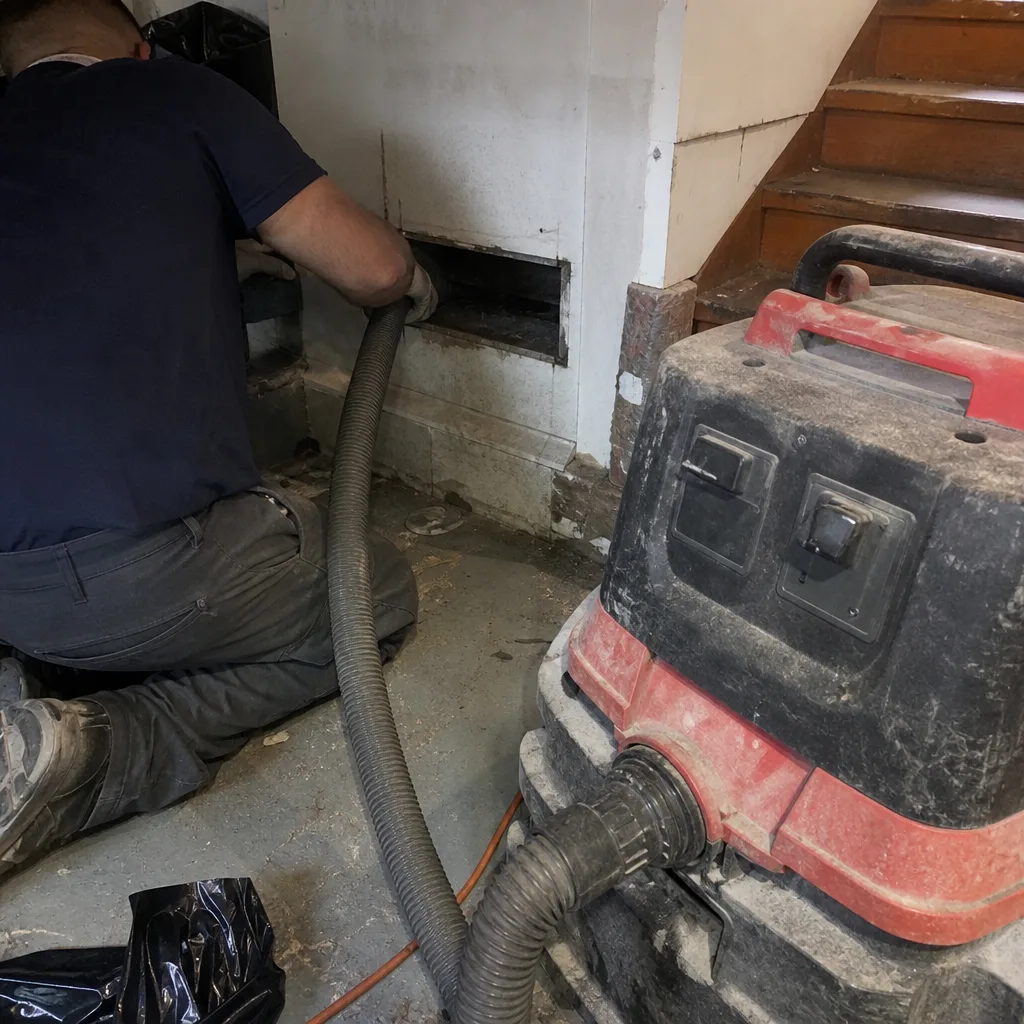 Before
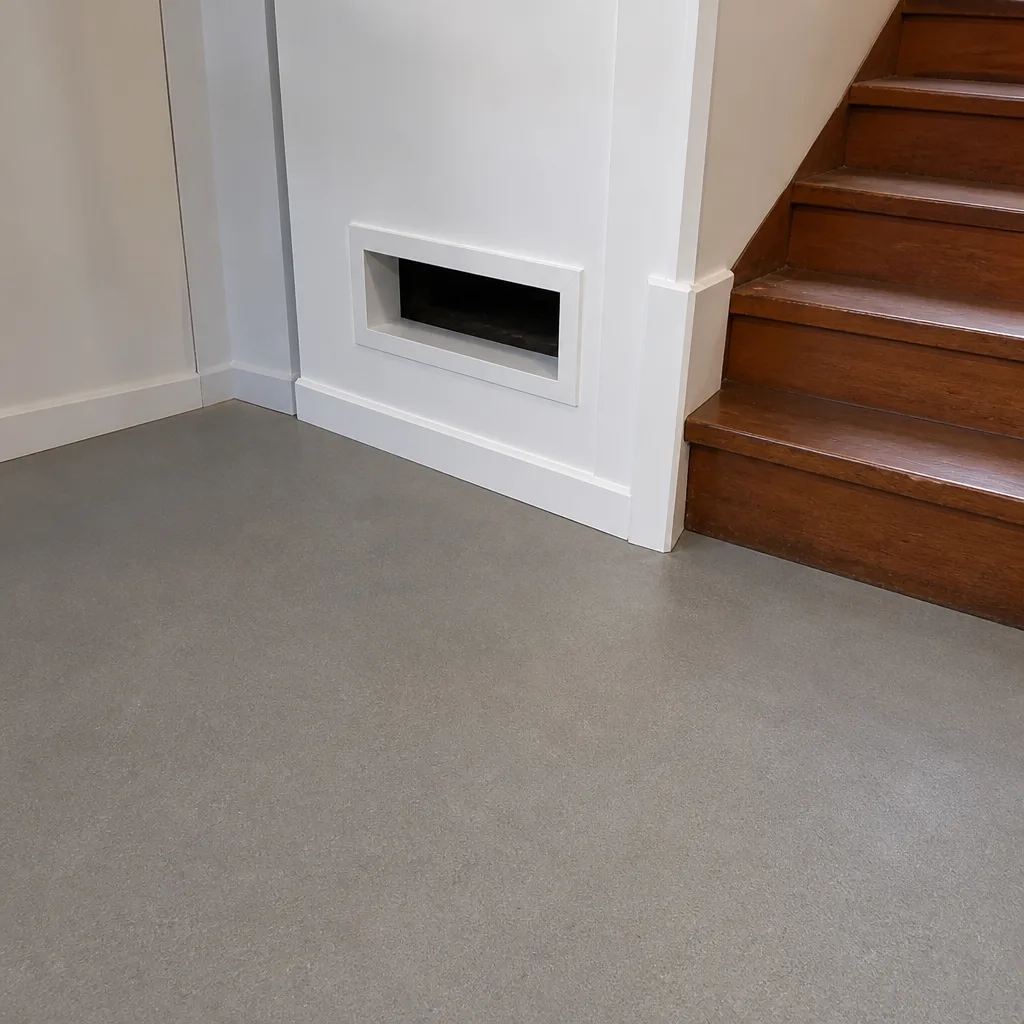 After
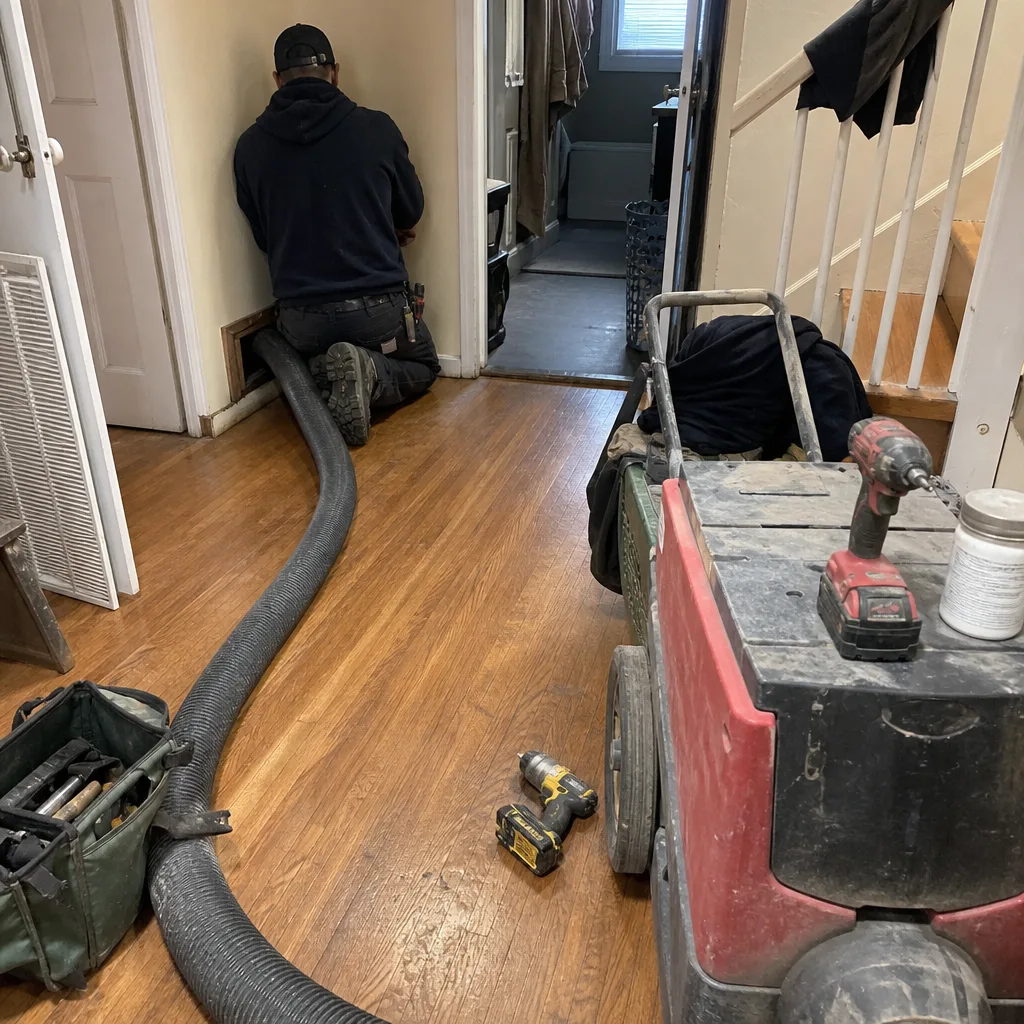 Before
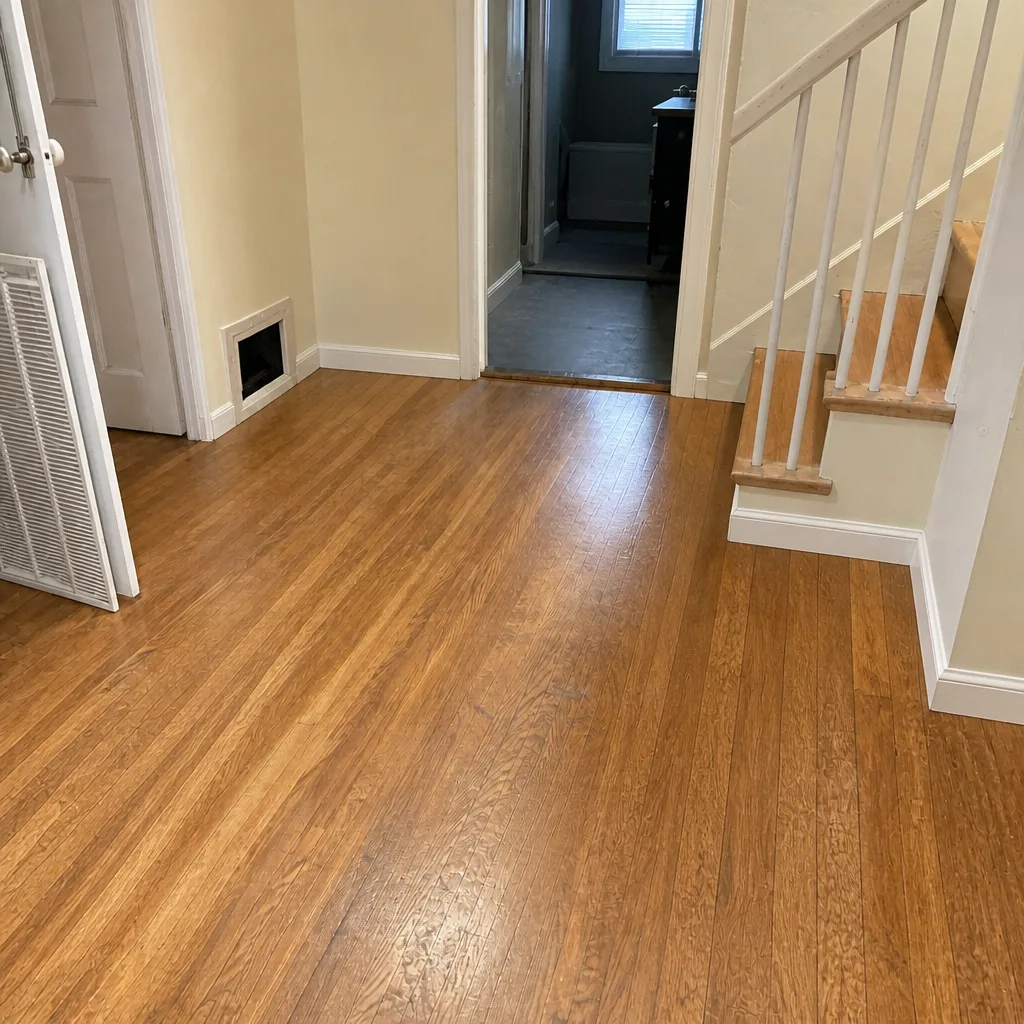 After
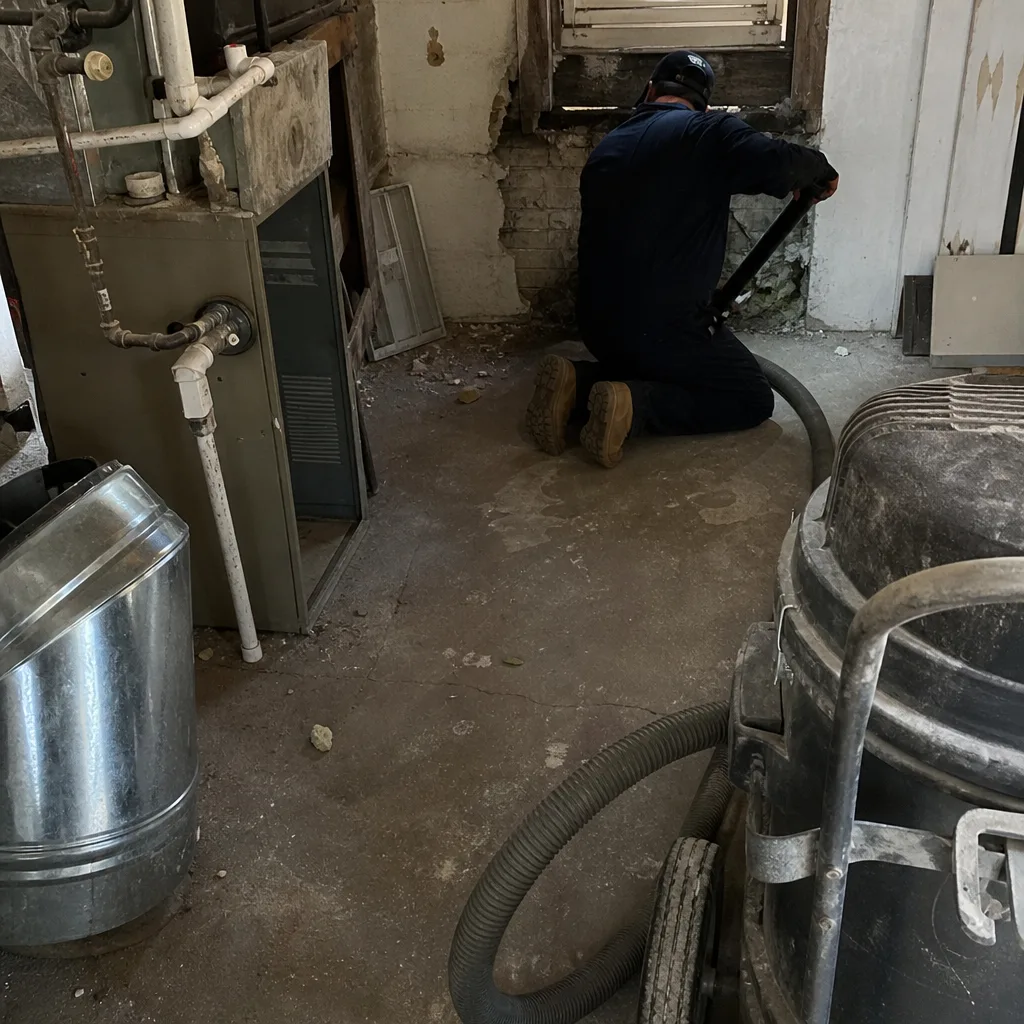 Before
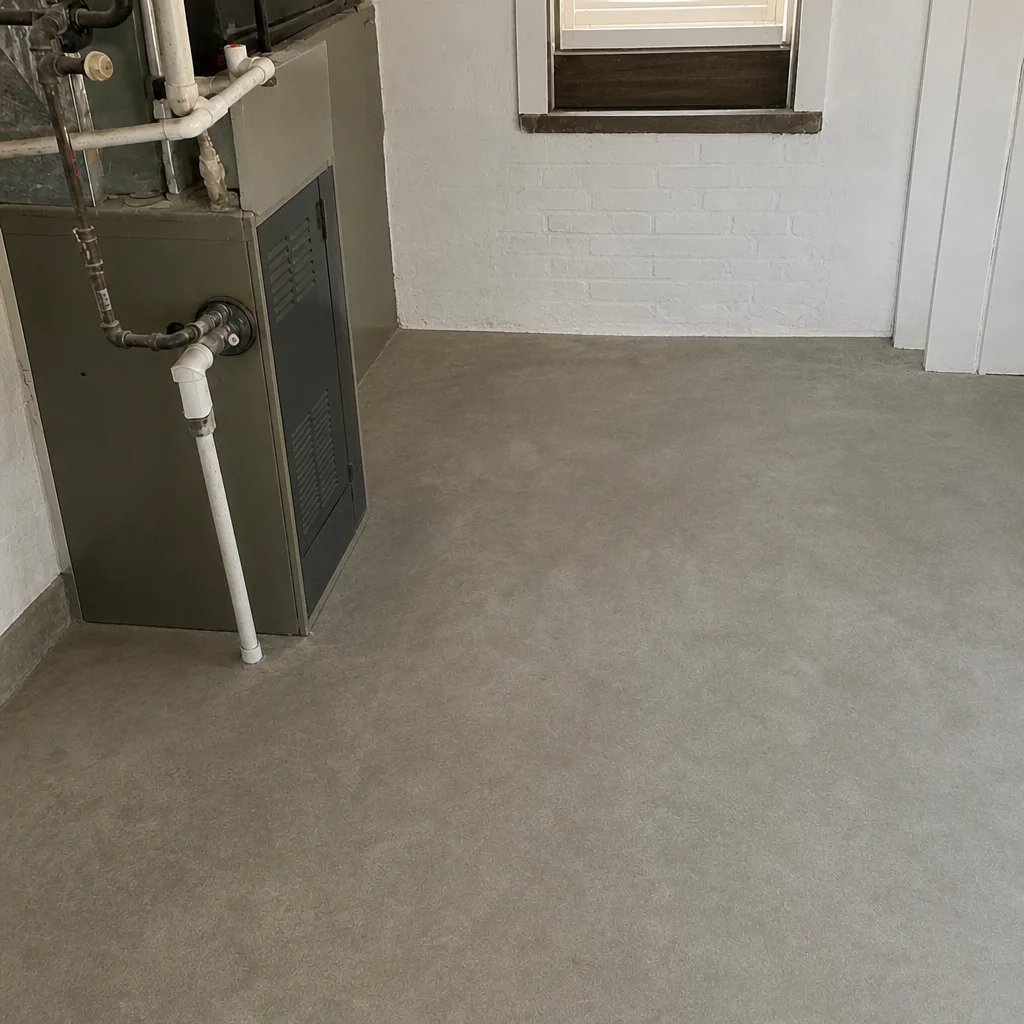 After
When to Call a Professional
Some duct issues are maintenance; some are safety. If you’re seeing visible dust tracking on supply grilles, a persistent musty odor when the system runs, or you’ve just moved into a South Buffalo house with no service history, a professional assessment is worth the visit. If you have a pre-1980 house and you’re not sure whether your duct wrap or duct board contains asbestos, don’t guess – that’s a professional call before any cleaning begins. If a disconnected or crushed flex run in the attic or crawlspace is flagged by an inspector, or if the furnace or air handler shows rust at the plenum or a wet condensate pan, call for an assessment. Air Duct Cleaning South Buffalo offers free estimates in South Buffalo – call (844) 935-2565. We answer 24/7. Fast dispatch from 7am to 7pm, Sunday through Friday.
Frequently Asked Questions
No. Routine air duct cleaning in New York does not require a building permit because it’s classified as maintenance, not construction. A permit typically becomes necessary only when work crosses into altering the mechanical system – new duct runs, rerouted trunks, replacements with different materials, or cutting into certain plenum assemblies. Call (844) 935-2565 for a free estimate and we’ll tell you which category your job falls into before booking.
Possibly, and it’s worth finding out before the crew arrives. Pre-1980 duct systems can contain asbestos in duct wrap, duct board or joint compound. If those materials are intact and won’t be disturbed, cleaning can usually proceed. If they’re damaged or friable, a licensed asbestos abatement contractor should handle the material first. Call (844) 935-2565 to set up a free estimate and we’ll look at the system with that in mind.
Duct cleaning removes accumulated dust and debris from an existing system, and sanitizing treats surface microbial growth. Mold remediation applies when contamination is extensive, when porous material is saturated with growth, or when the moisture source is still active – and it generally requires a contractor with remediation credentials. In our experience, sanitizing without fixing the moisture source is cosmetic. Call (844) 935-2565 for a free estimate on the cleaning side.
Keep the service invoice, the sanitizer safety data sheet for any product used, repair and sealing receipts, your dryer vent cleaning record, before-and-after photos of your own ductwork, and any permit or final inspection sign-off if the work required one. Those records are what a home inspector or buyer’s attorney asks for during a sale. Call (844) 935-2565 and we’ll include the documentation with your estimate.
Not a formal code inspection, but the buyer’s general home inspector will look at the duct system – grilles, moisture indicators at the plenum, flex duct condition in the attic, and whether access panels exist and are documented. Erie County and City of Buffalo records only verify permitted work; routine cleaning doesn’t show up there, which is why keeping your own file matters. Call (844) 935-2565 for a free estimate if your system has no history on file.
Yes, and it’s often necessary in older South Buffalo homes that have almost no service access. The important question is which type of access panel: a service access door for cleaning doesn’t usually trigger a permit, while cutting into certain plenum assemblies can. We distinguish those before the work begins. Call (844) 935-2565 for a free estimate and we’ll explain what your system actually needs.
The Bottom Line
Permits and inspections in South Buffalo duct work come down to one distinction: routine cleaning is maintenance and stays off the permit desk; altering a mechanical system crosses into code territory. For most homeowners, the practical takeaways are simple – ask before any access panel gets cut which assembly it’s penetrating, treat pre-1980 duct wrap and duct board as possible asbestos until someone has looked at them, and don’t sanitize around a moisture problem. Keep your paperwork: cleaning records, sanitizer SDS sheets, photos and any permit. Those are the documents a home inspector will ask for, and the ones that move a sale. And when you’re picking a contractor, let equipment and capability decide – a Rotobrush or Nikro system, Honeywell, Aprilaire or Guardsman products on the shelf, and a company that can repair and seal the ducts it just cleaned. Call (844) 935-2565 for a free estimate. We answer 24/7. Fast dispatch from 7am to 7pm, Sunday through Friday.
Written by the team at Air Duct Cleaning South Buffalo.